Conscious Recovery Training Survey Results.

Blue background with the text 'Conscious Recovery Survey Data' and a logo of a bird in a cage with an open door and the words 'Conscious Recovery: a fresh perspective on addiction'.
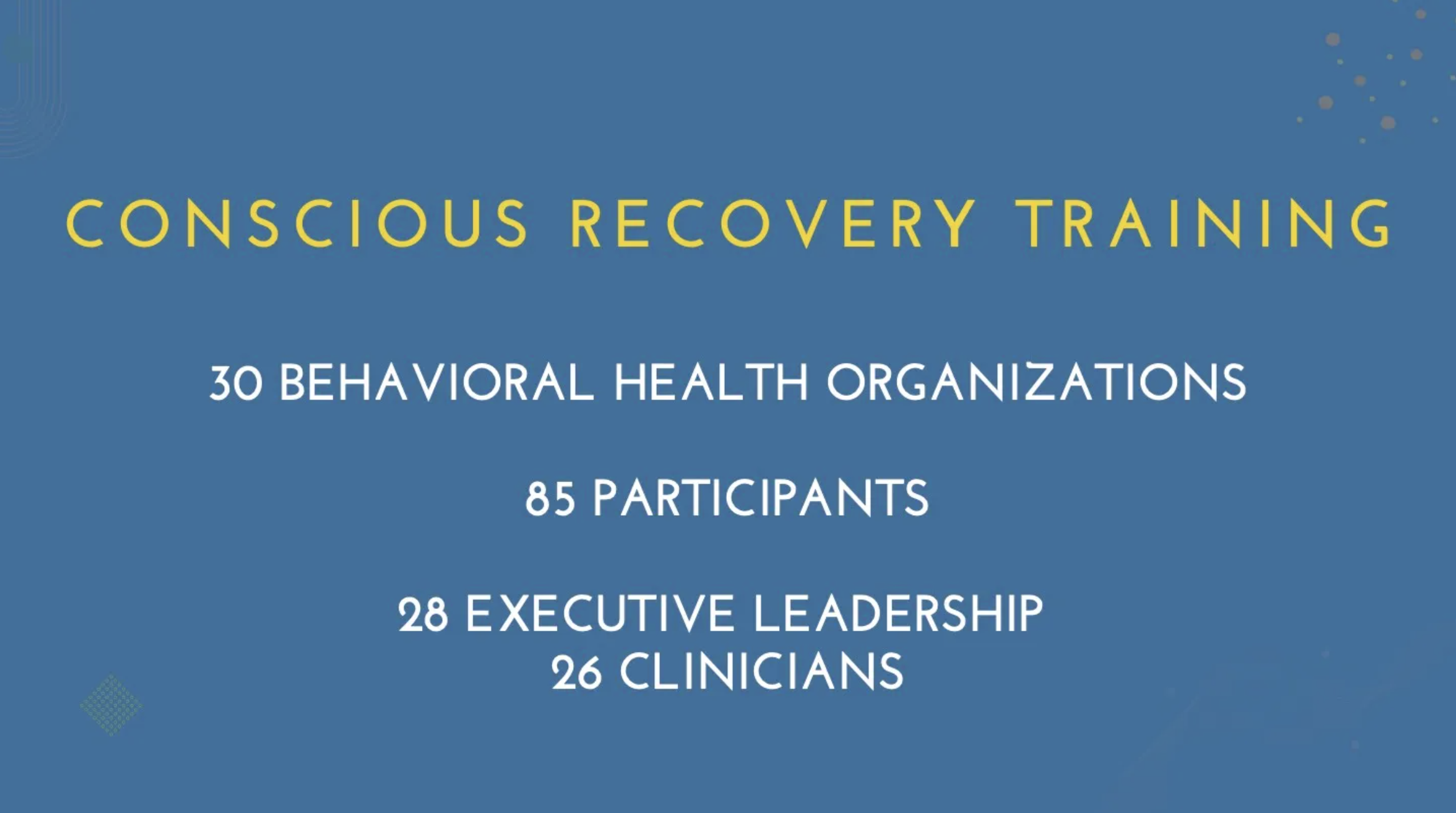
Slide titled 'Conscious Recovery Training' with details: 30 Behavioral Health Organizations, 85 Participants, 28 Executive Leadership, 26 Clinicians, on a blue background with decorative dots.
Slide with blue background and yellow text reading 'Pre Training Survey Results'.
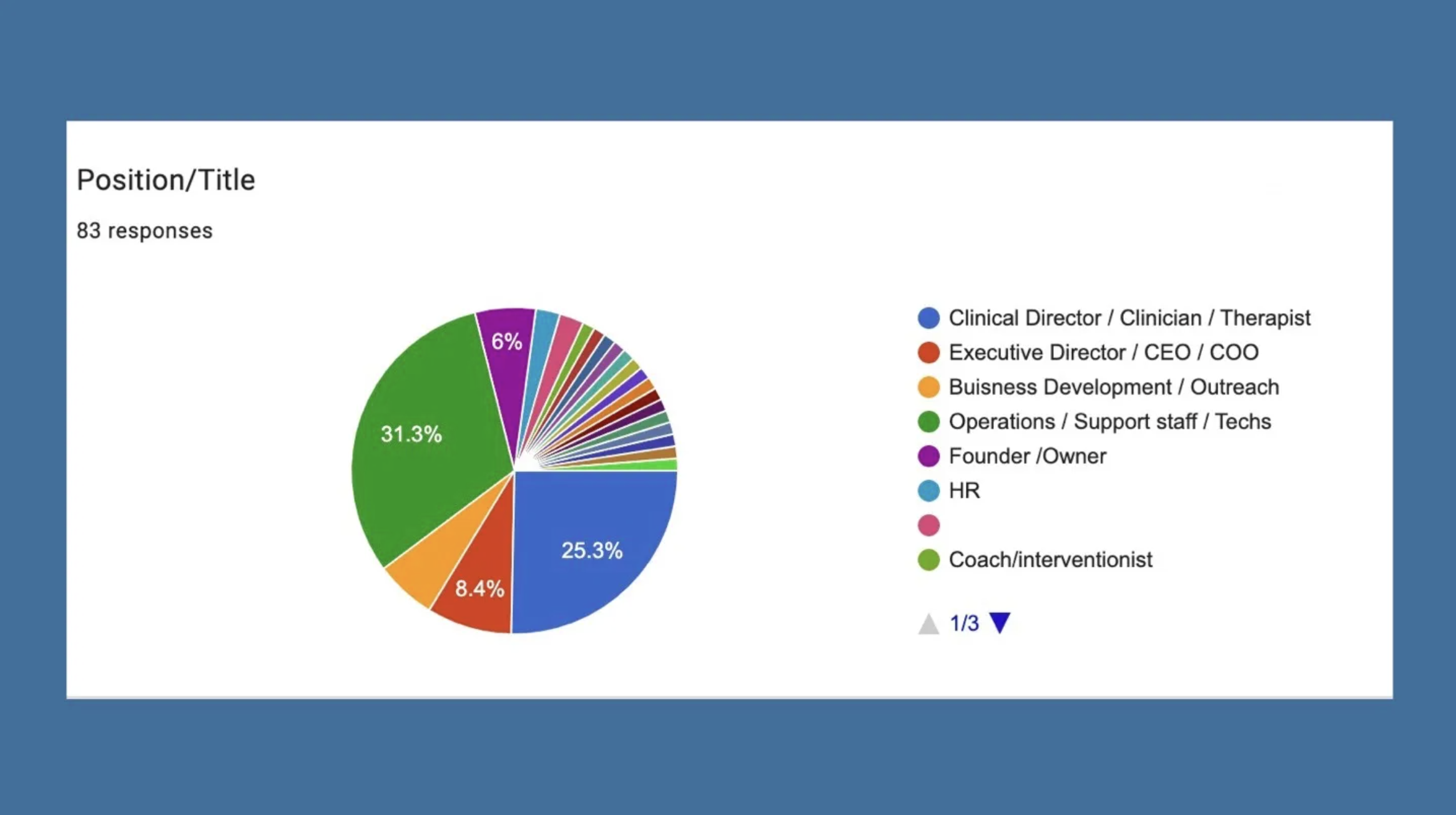
Pie chart illustrating responses to a survey about job positions. The chart shows 83 responses, with segments representing Clinical Director/Clinician/Therapist (25.3%), Operations/Support Staff/Techs (31.3%), Executive Director/CEO/COO (8.4%), Founder/Owner (6%), Business Development/Outreach, HR, Coach/interventionist, and other roles.
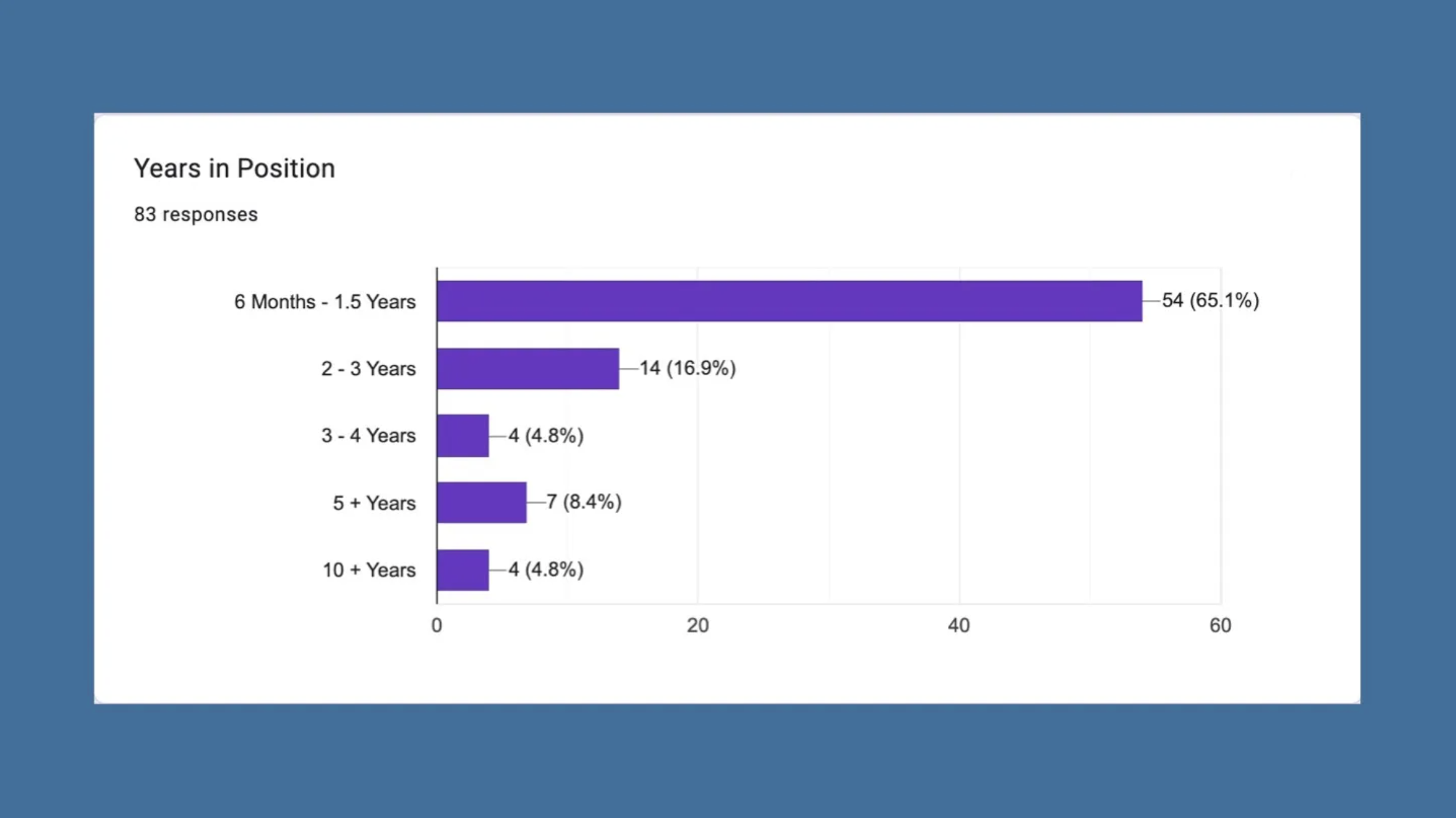
Bar chart showing responses to the question of years in position with 83 responses. The options are 6 months to 1.5 years (54 responses, 65.1%), 2-3 years (14 responses, 16.9%), 3-4 years (4 responses, 4.8%), 5+ years (7 responses, 8.4%), and 10+ years (4 responses, 4.8%).
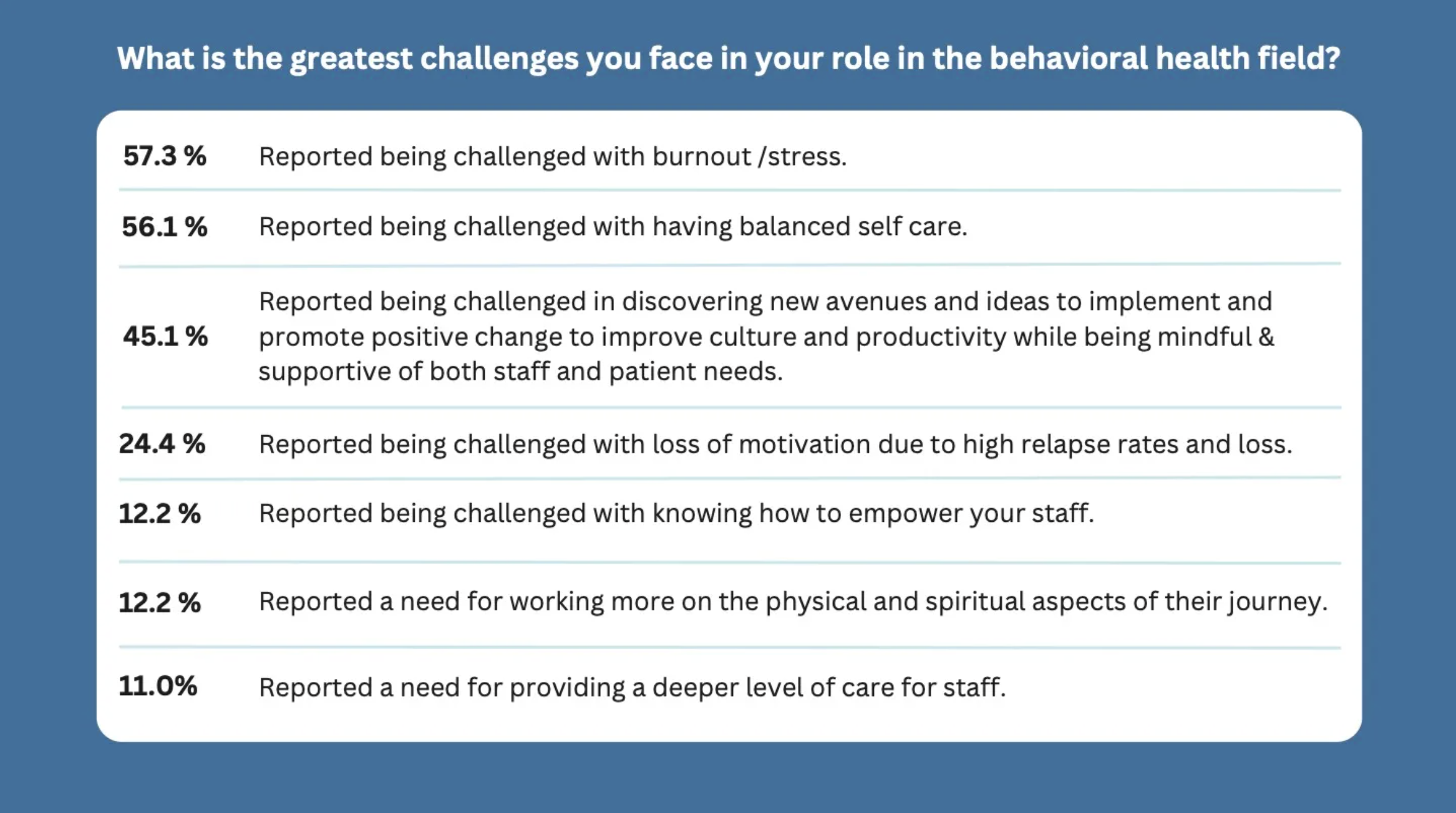
A survey results chart showing the greatest challenges faced in behavioral health roles, with 57.3% challenges with burnout/stress, 56.1% with balanced self-care, 45.1% with promoting positive change, 24.4% with loss of motivation, 12.2% with empowering staff, 12.2% with physical and spiritual aspects, and 11.0% with providing deeper care.
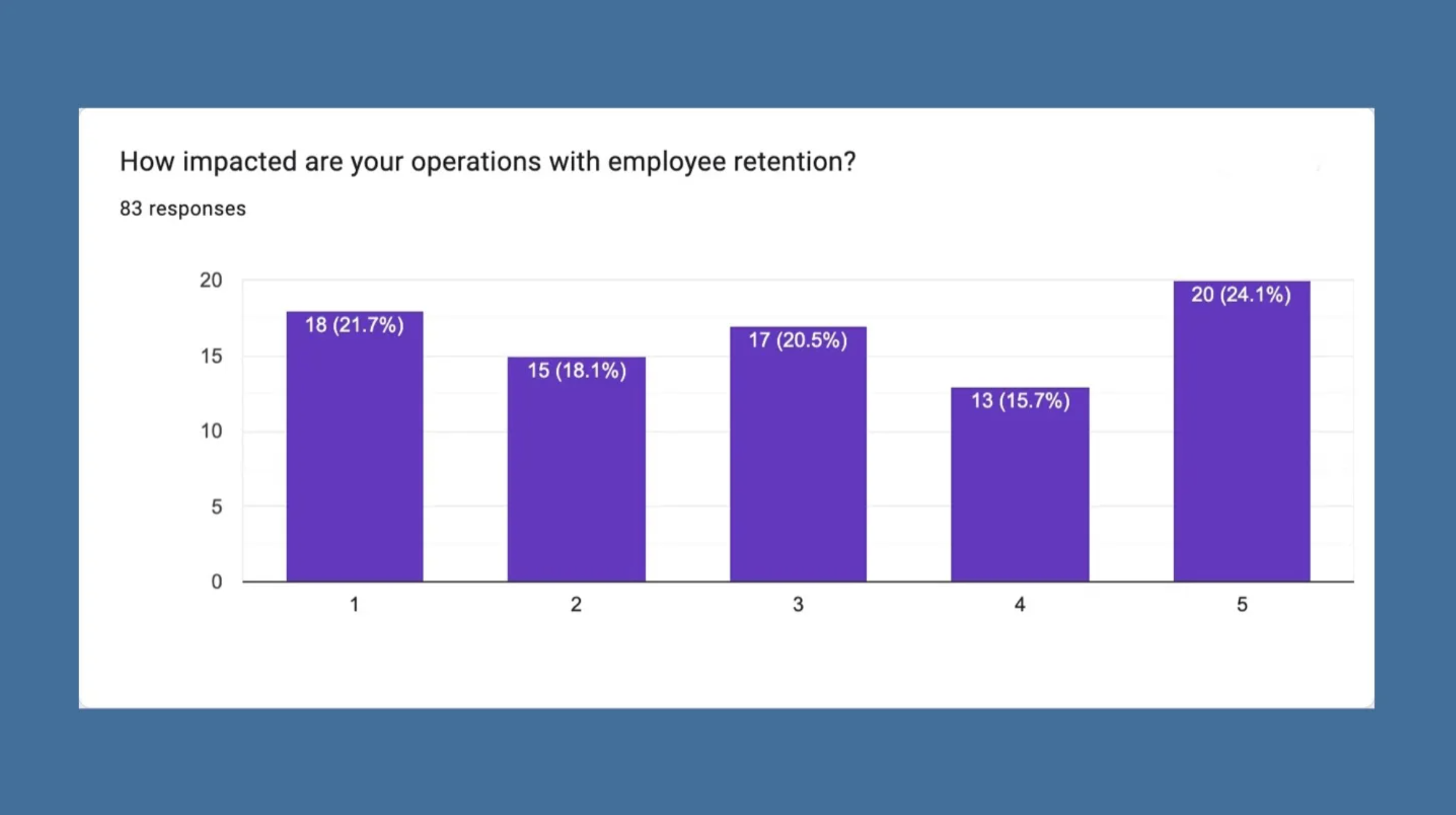
Bar chart titled 'How impacted are your operations with employee retention?' showing 83 responses with five bars representing ratings from 1 to 5. The bars are purple and display exact response counts and percentages: 1 - 18 (21.7%), 2 - 15 (18.1%), 3 - 17 (20.5%), 4 - 13 (15.7%), 5 - 20 (24.1%).
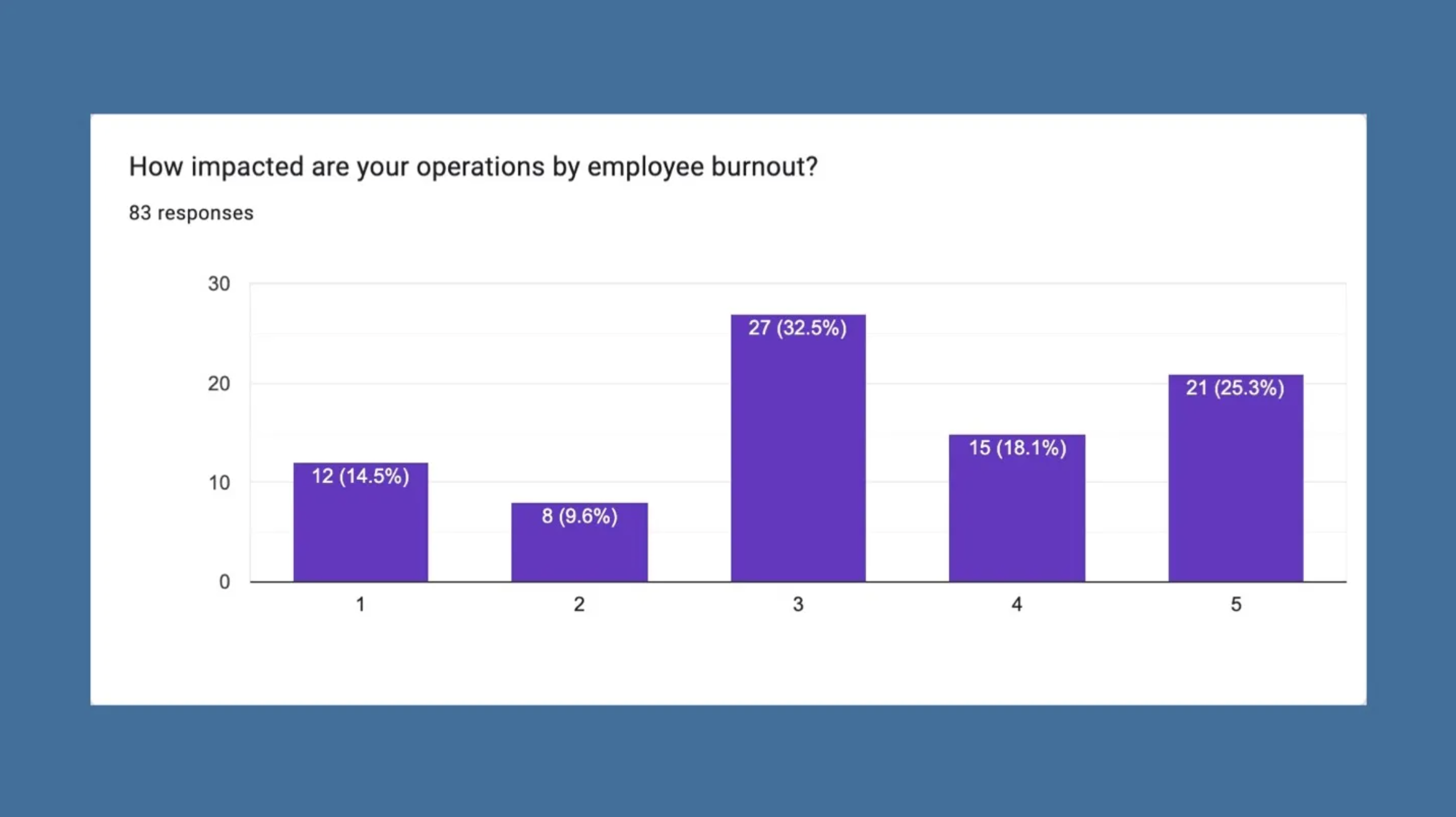
Bar chart showing responses to how employee burnout impacts operations, with categories 1 through 5 and response counts of 12, 8, 27, 15, and 21 respectively.
Blue background with yellow text that reads "Post Training Survey Results".
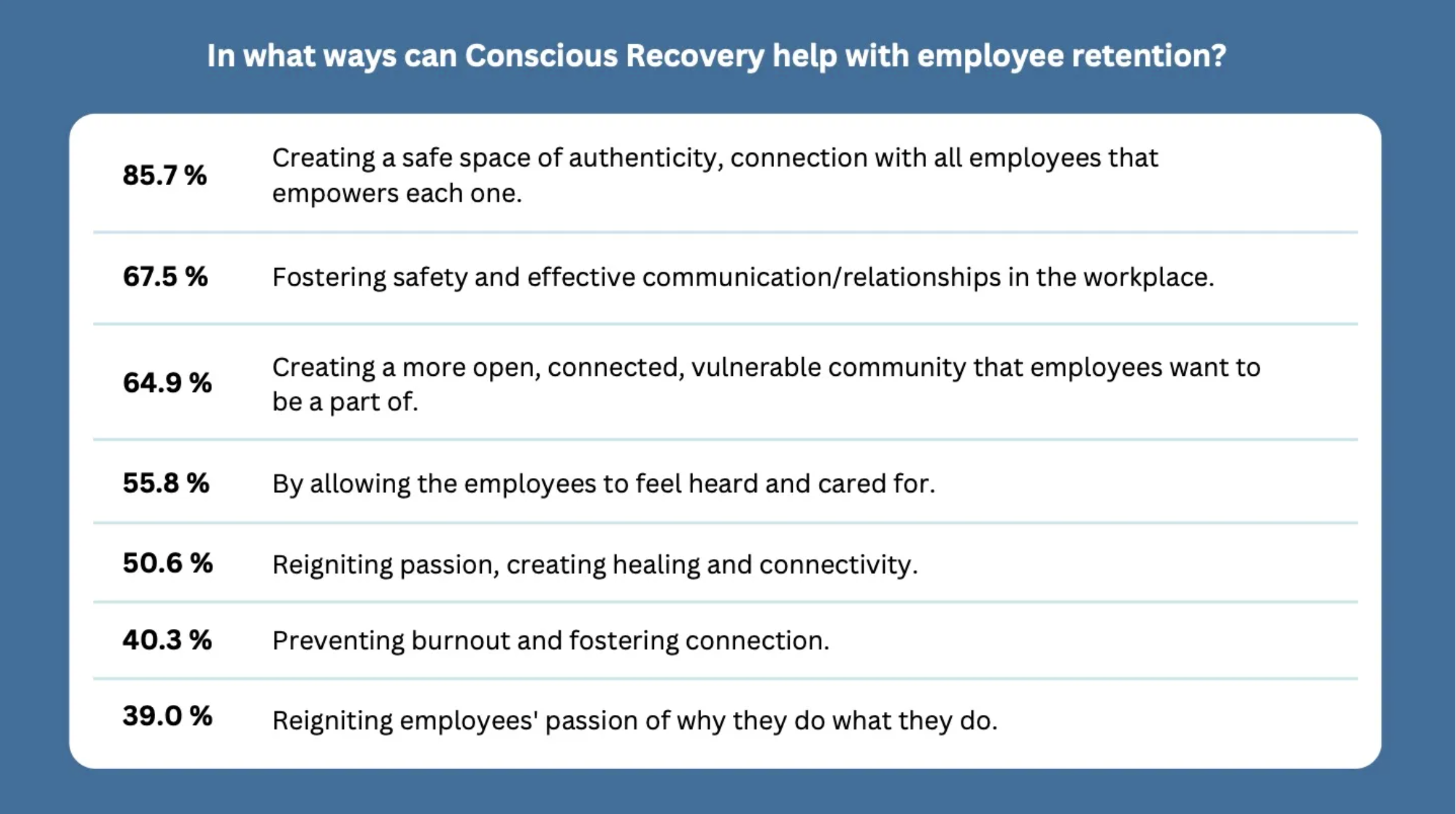
A table showing percentages of how conscious recovery can help with employee retention, including creating a safe space, fostering communication, building community, allowing employees to feel heard and cared for, reigniting passion, preventing burnout, and reigniting passion for work.
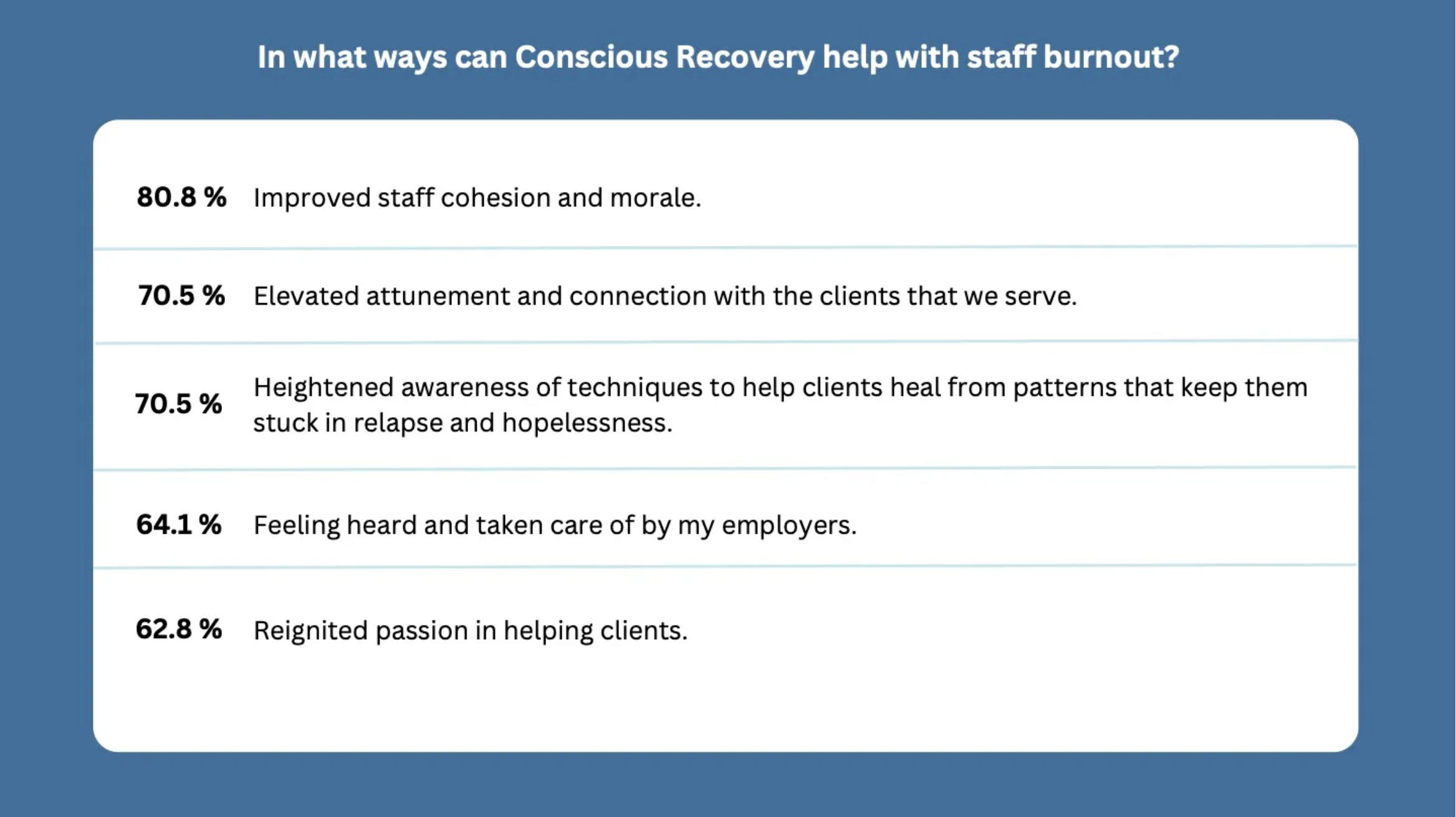
A chart titled 'In what ways can Conscous Recovery help with staff burnout?' showing percentages and reasons including improved staff cohesion, elevated attunement with clients, heightened awareness to help clients heal, feeling heard and cared for, and passion for helping clients.
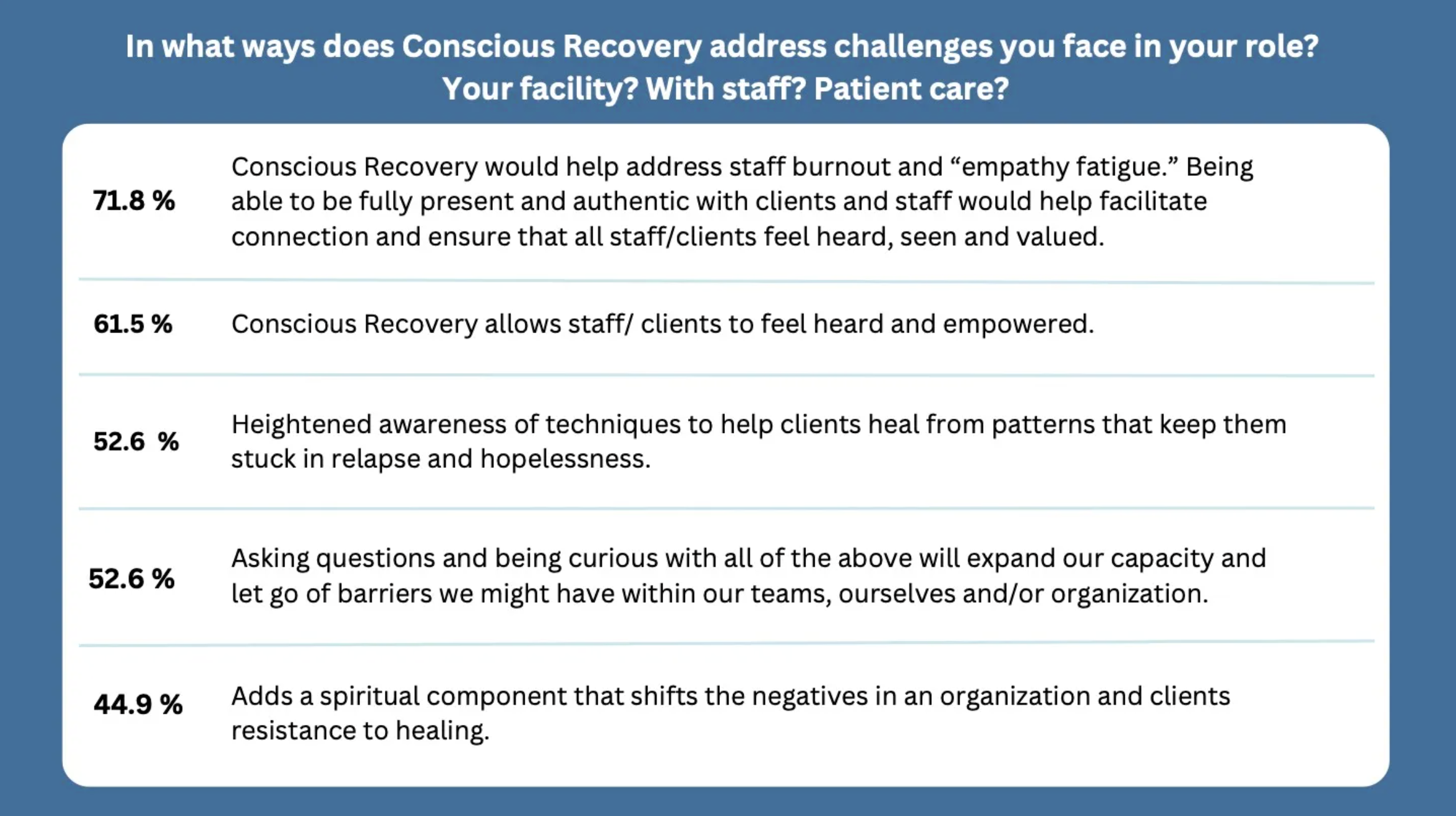
Survey results on how Conscious Recovery addresses challenges in patient care, with percentages indicating responses related to staff burnout, empathy, healing techniques, curiosity, and spiritual components.
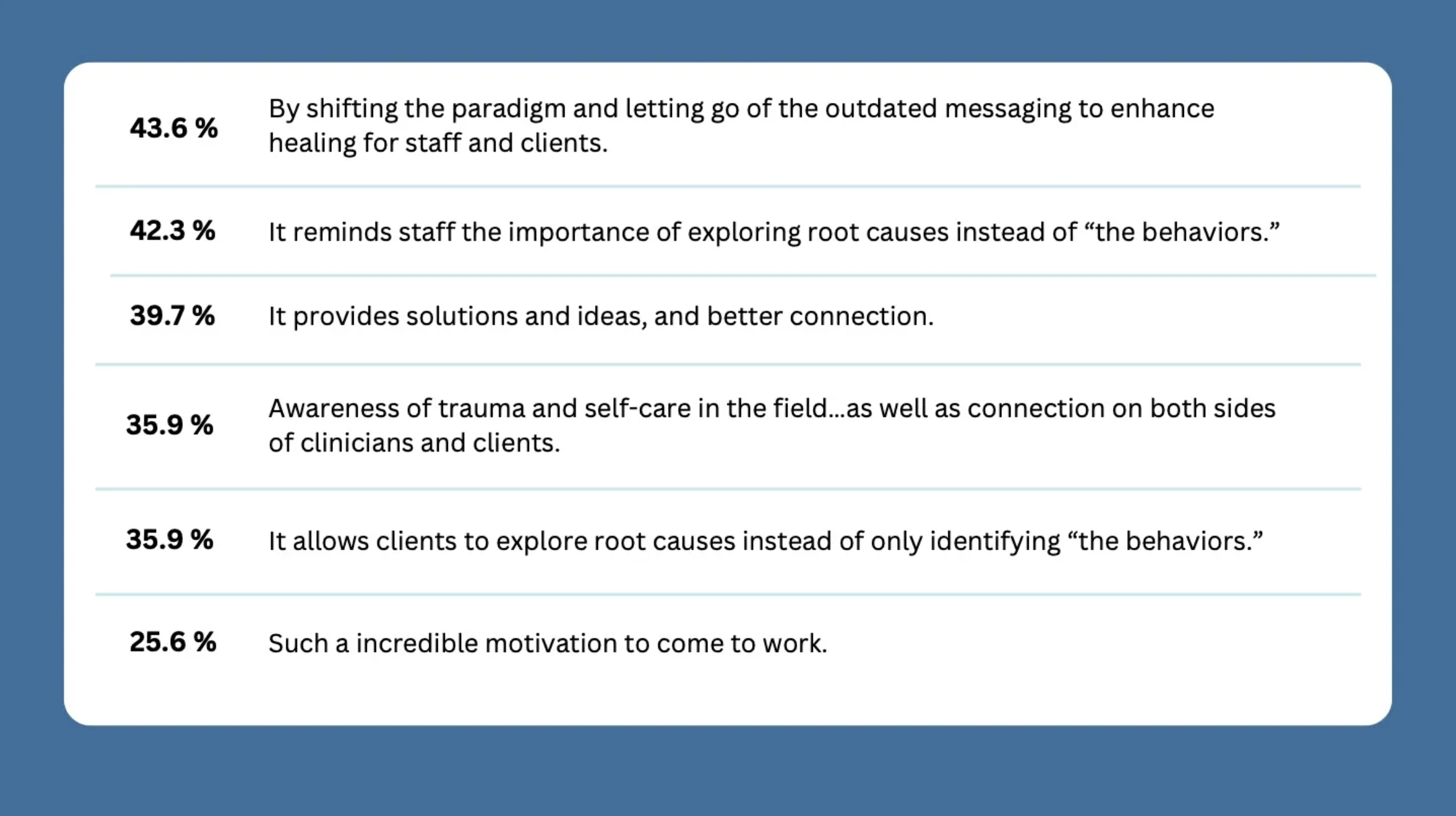
A list highlights the benefits of shifting paradigms in healthcare, including improved healing, exploring root causes, providing solutions, raising trauma awareness, enabling client exploration, and increasing motivation.
Logo of Conscious Recovery with a birdcage and hummingbird, featuring the text "Conscious Recovery" and the website "www.ConsciousRecovery.com".